

Workplace safety isn’t just about fire drills, sturdy ladders, or spill signs. Sometimes, it’s about knowing what to do when someone’s heart stops and let’s be honest, that’s not something most people think about until it’s too late. On-site CPR training bridges that gap. It turns “I hope I never have to deal with that” into “If it happens, I’m ready.” And when employees feel ready, confidence (and safety) skyrockets.
1. Emergencies Don’t Wait for the Paramedics
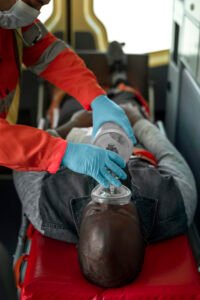
The average ambulance response time in the U.S. is around 7–8 minutes but brain damage can start within 4 minutes of cardiac arrest. That’s a dangerous gap.
On-site First aid and CPR training prepares your team to take action immediately. Instead of waiting and watching, they can step in with CPR, keeping blood and oxygen flowing until professional help arrives.
It’s the difference between standing helplessly by and actually making a life-saving impact.
2. Familiarity Builds Confidence
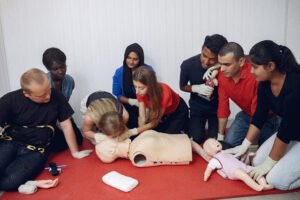
When training happens in your actual workspace, employees get to practice in the environment where emergencies might occur. They learn where the AED is, what the room layout means for positioning, and how to work together as a team.
It’s a huge confidence booster. People aren’t just memorizing steps, they’re rehearsing the real thing in a familiar setting. If you’ve ever Googled AED kits near me, you know knowing the exact location matters more than you’d think.
3. It Strengthens Teamwork and Communication
Emergencies require fast, clear communication. During CPR training, teams learn how to assign roles: one person calls 911, another starts compressions, a third grabs the AED.
That kind of coordination doesn’t just help during medical emergencies, it spills over into everyday teamwork. When people know they can rely on each other in high-pressure moments, trust grows.
4. It’s Not Just CPR, It’s Comprehensive Safety
Quality CPR services often include First Aid, choking response, and AED use. This means your team can respond to a wide range of incidents, from allergic reactions to cuts, burns, or choking hazards in the break room.
Many providers (including Stress Free CPR) even offer Free CPR and AED service demos, so employees can refresh their skills without committing to a full course every time.
5. A Culture of Preparedness Attracts Talent
You might not think of CPR training as an employee perk, but it is. Workers notice when a company invests in their well-being. And in today’s job market, people value employers who care about more than just productivity numbers.
A 2023 Gallup poll found that employees who feel their workplace cares about their overall health and safety are 69% less likely to actively look for another job. That’s a serious retention advantage for something that can be done in a single afternoon.
FAQS
1. What are the key steps involved in effective CPR training?
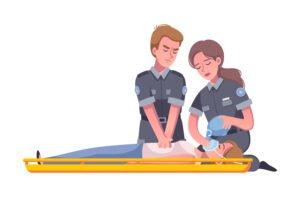
Answer: Effective CPR training covers recognizing when CPR is needed, calling emergency services, performing chest compressions at the recommended depth and rate (100–120 compressions per minute, at least 2 inches deep), and knowing when to include rescue breaths or rely on Hands-Only CPR. Stress Free CPR’s hands-on courses teach these foundational skills, helping you build both confidence and muscle memory.
2. Do I need to learn mouth-to-mouth ventilation during CPR training?
Answer: Not necessarily many modern CPR curricula emphasize Hands-Only CPR (chest compressions only) for untrained bystanders, as it’s simpler and still highly effective for adult cardiac arrests. Stress Free CPR offers this streamlined approach alongside full CPR techniques, making training accessible for all learners.
3. How long is CPR training certification valid?
Answer: Most CPR certifications including those similar to the ones offered by Stress Free CPR are valid for 2 years. However, skills can degrade quickly, with studies indicating that only about 50% of learners pass CPR skills tests after one year. Repeating or refreshing training helps ensure you’re ready when it matters.
4. Can I get certified in CPR training online or do I need in-person practice?
Answer: You can begin CPR training online many courses offer a “blended” structure where theory is covered virtually, followed by an in-person skills assessment. Stress Free CPR may similarly offer flexible, hybrid learning to accommodate different schedules while ensuring hands-on proficiency.
Invest in CPR Training
On-site CPR training is more than a safety checkbox. It’s an investment in people, their confidence, their teamwork, and their ability to protect each other when seconds count.
When employees know they can act quickly and correctly, they feel safer. And when they feel safer, they work better.
So don’t wait for an emergency to expose the gap in your workplace safety plan. Bring CPR training to your team, in your space, and turn uncertainty into readiness. Because in the moments that matter most, confidence is as important as competence.