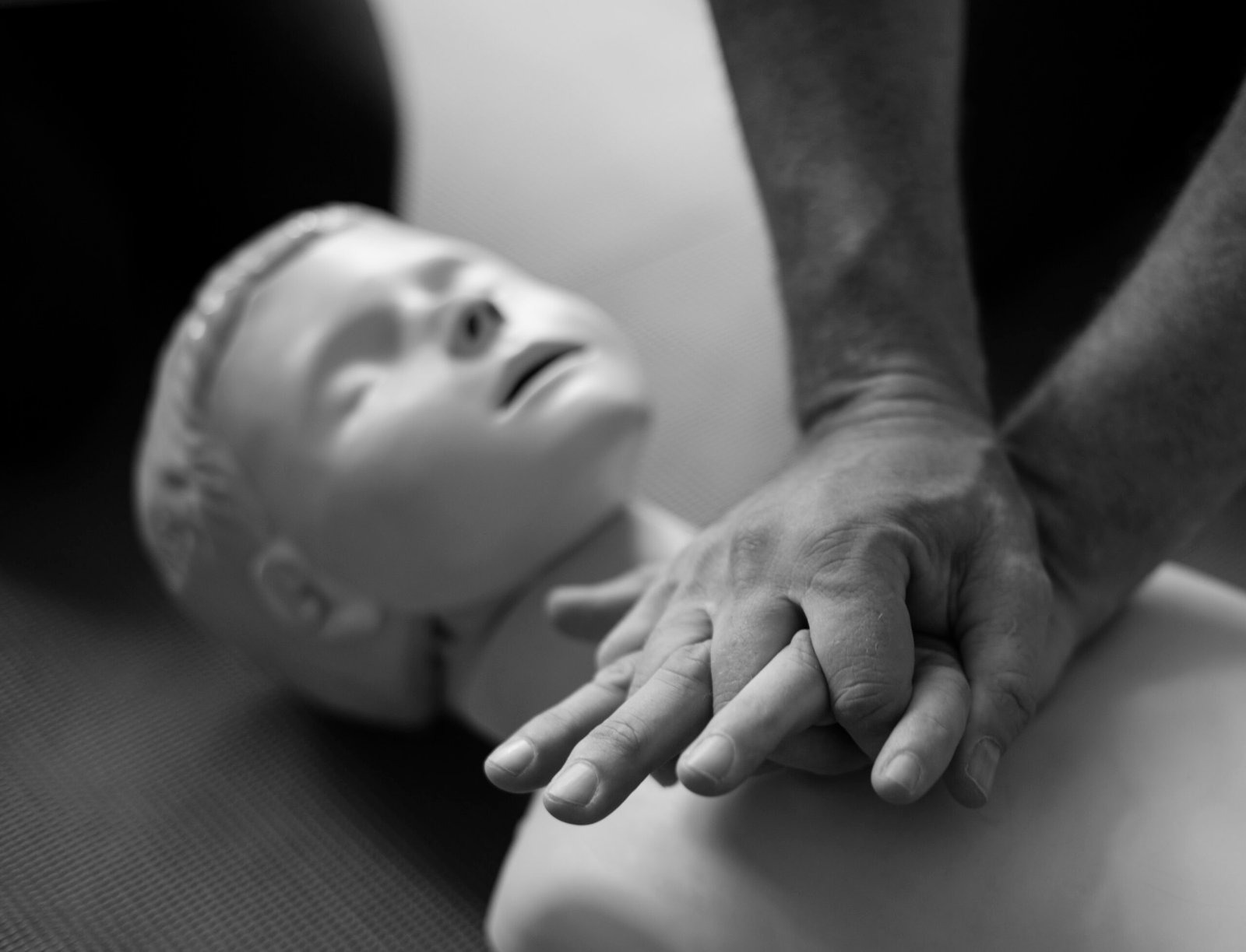
Nobody wakes up thinking, “Today’s the day I’m going to perform CPR.” But emergencies don’t check your schedule. One minute you’re at work, at the gym, or watching a soccer game, the next, someone collapses, and all eyes turn to you. Your heart pounds, your hands sweat, your brain screams, “Don’t mess this up!” Staying calm? Easier said than done. But here’s the thing, calm is a skill you can train for, just like CPR itself. And today, we’re talking about how.
1. Accept That Panic Is Normal
Your body’s “fight or flight” system kicks in during emergencies. Adrenaline floods your system, your heart rate spikes, and fine motor skills drop. That’s biology, not weakness. The trick is recognizing it and pushing forward anyway.
Tip: In First aid and CPR training, you’ll notice how repeated practice makes the steps almost automatic. That’s muscle memory doing the heavy lifting while your brain catches up.
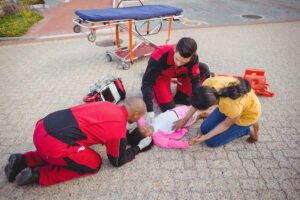
2. Focus on the Task, Not the Fear
Fear loves to shout, “What if I get it wrong?” Ignore it. Shift your attention to what you can do: check responsiveness, call 911, start compressions. Break it down into tiny steps instead of thinking about the whole scenario.
Fact: According to the American Heart Association, bystander CPR can double or triple survival rates. That’s a lot of good you can do simply by acting instead of freezing.
3. Know Your Resources Before You Need Them
Ever been in a building and realized you have no clue where the fire exits are? Same goes for AEDs. In an emergency, you won’t have time to Google AED kits near me. Learn their locations at your workplace, gym, or school ahead of time.
Bonus: Some public safety programs offer Free CPR and AED service demos so you can get hands-on without pressure.
4. Control Your Breathing
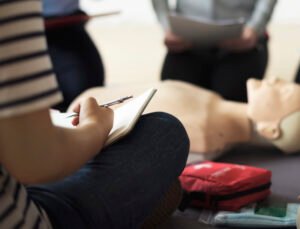
It sounds small, but slow, deep breaths tell your body, “We’ve got this.” Even two or three controlled breaths before you start CPR can help steady your hands and clear your head.
Tip: In CPR services and training sessions, try practicing compressions right after a quick breathing exercise. You’ll see how much calmer and more focused you feel.
5. Lean on Your Training (and Update It Often)
Skills fade if you don’t use them. The confidence you build in CPR training is what turns a chaotic moment into a controlled response. If it’s been more than two years since your last class, it’s time for a refresher.
FAQS
1. What should I do during CPR emergencies when someone collapses unexpectedly?
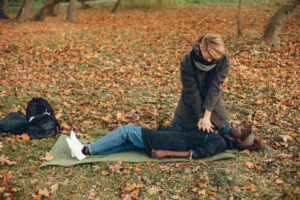
Answer: In cases of sudden collapse, begin with chest compressions immediately push hard and fast at the center of the chest at a rate of 100–120 compressions per minute until emergency services or a defibrillator are available. Stress Free CPR’s training courses cover these critical techniques and also provide guidance on locating and using AED kits during an emergency.
2. How do hands-only CPR methods help in CPR emergencies for untrained bystanders?
Answer: Hands Only CPR focusing solely on chest compressions without rescue breaths is highly effective in adult CPR emergencies and easy for untrained bystanders to remember. Stress Free CPR teaches Hands-Only CPR, giving learners the confidence to act swiftly in real-life emergencies.
3. What are the most common mistakes to avoid during CPR emergencies?
Answer: In CPR emergencies, common errors include incorrect compression depth or pace, hesitation due to fear, or not calling 911 promptly. Stress Free CPR’s programs emphasize practical drills to help learners overcome hesitation and get the timing and technique right under pressure.
4. How can I stay calm during CPR emergencies and act effectively?
Answer: Staying composed in CPR emergencies comes from familiarity and rehearsal. Stress Free CPR’s hands-on training scenarios simulate real-life stressors to build muscle memory and confidence, helping trainees stay calm and focused when every second counts.
Why Calm Matters
When you’re calm, you make better decisions, work faster, and inspire others to step in and help. Panic slows everything down. Calm speeds up survival. It’s not about being fearless — it’s about channeling that fear into action.
At Stress Free CPR, we believe learning in a relaxed, supportive environment makes you more likely to stay cool under pressure. We don’t just teach technique. We teach confidence. Because in an emergency, confidence is contagious.
Emergencies will always be high-stakes
Your pulse will race. Your mind will spin. But with the right preparation, you can move from panic to prepared in seconds and those seconds matter.
So, find a class, learn where your nearest AED is, and practice until the steps feel second nature. The day comes, and it’s you on the scene? You’ll take a deep breath, put your hands in position, and start saving a life, without letting panic win.